Refrigerant Leaks in ACs, Heat Pumps, and Mini Splits
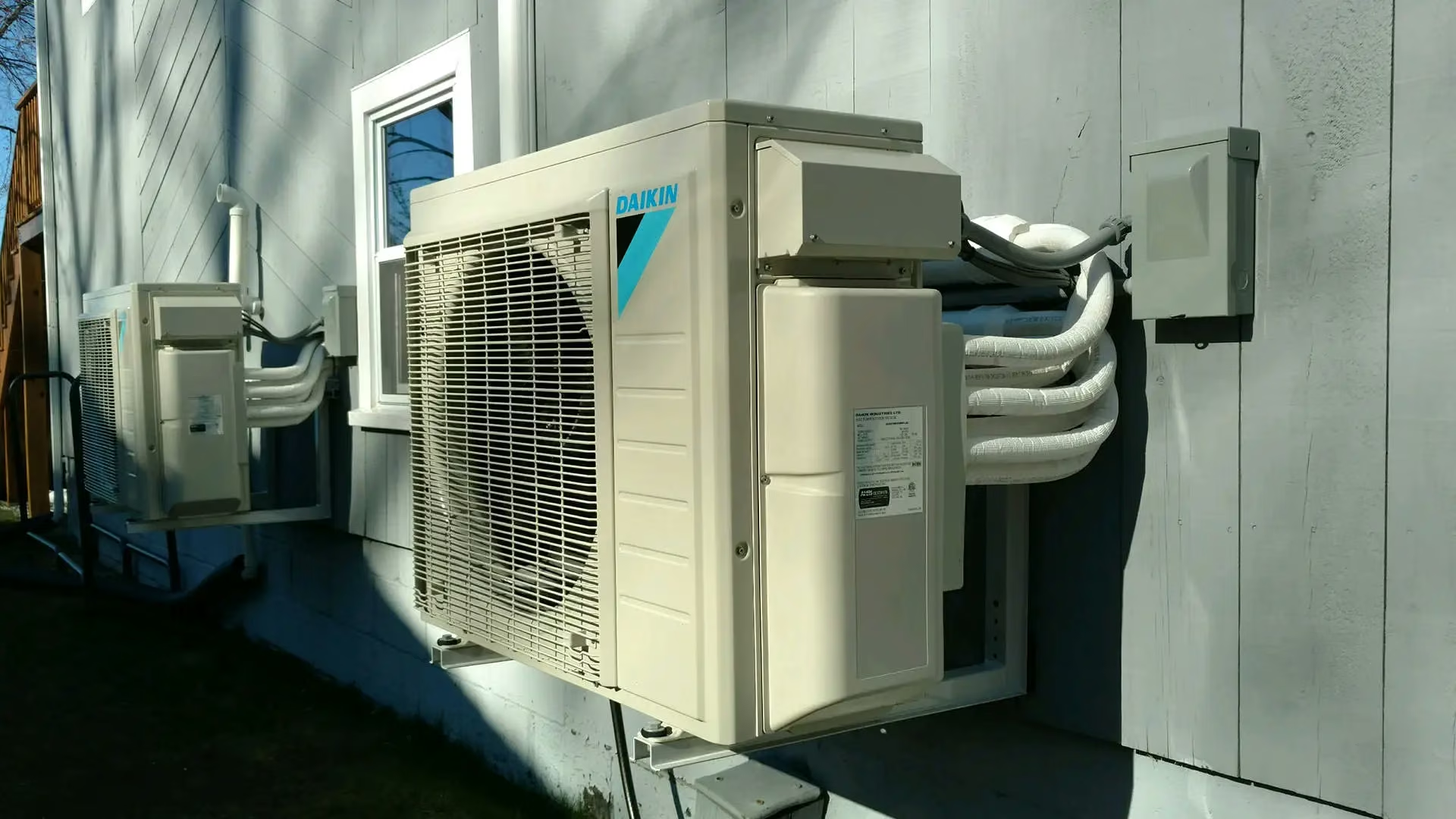
A refrigerant leak can reduce capacity, increase runtime, damage equipment, and release refrigerant to the atmosphere. Some leaks begin at field-made connections, while others develop later in valves, coils, or tubing. Proper installation and commissioning reduce avoidable connection leaks, but no installation method can prevent every future equipment failure.
Where refrigerant leaks happen
Common locations include flare or brazed connections, service valves and ports, indoor or outdoor coils, and damaged line sets. The technician tests the system instead of assuming the location from the equipment type.
Why leaks happen
Common causes:
- Improper flare connections on mini split installations (over- or under-torqued flares, damaged flare faces)
- Vibration over time stressing connections at the outdoor unit
- Formicary corrosion on copper coils, caused by certain VOCs interacting with copper in the presence of moisture (more common in newer high-density coil designs)
- Physical damage from landscaping, snow removal, or rodents chewing on insulation and tubing
- Inadequate brazing technique on field-installed line sets
- Worn Schrader valve cores from repeated service connections
How a refrigerant leak shows up
Symptoms that signal a possible leak:
- Cooling or heating capacity has dropped noticeably
- The system runs longer to reach the setpoint
- Indoor coil ices over in cooling mode
- Outdoor unit ices over more than usual in heating mode
- Electricity bills have crept up without a behavior change
- A hissing sound near the indoor unit, outdoor unit, or line set
- Visible oily residue near a connection (refrigerant oil escapes with the refrigerant)
How we find leaks
A technician with proper instruments can locate most refrigerant leaks during a service call:
- Electronic refrigerant leak detectors sniff for refrigerant molecules and indicate location
- Electronic leak detectors use sensing technologies, which may include infrared sensors, to detect refrigerant near a suspected leak. Bubble solution, pressure testing, isolation, and other manufacturer-approved methods may be used to confirm the source.
- UV dye injection tags the refrigerant with a fluorescent dye, then a UV light shows where the dye is escaping
- Bubble leak detector (soap solution) on suspected joints for confirmation
- Pressure decay testing with nitrogen on systems that have been recovered, before recharging
Topping off a leaking system without finding and repairing the leak is a short-term workaround. The refrigerant will leak out again, often more quickly the second time, and the released refrigerant contributes to climate change.
How we prevent leaks during installation
The best leak repair is a leak prevented during install. Our standard installation process is designed around long-term leak-free operation:
Equipment-specific connections, evacuation, and charging
We use the connection method specified for the equipment. Depending on the system, that may include precision flaring tightened to the manufacturer's torque specification, manufacturer-approved mechanical fittings, or brazing with dry nitrogen. We do not publish one fixed sequence because the selected equipment controls the method.
We follow the equipment manufacturer's evacuation and charging instructions on every installation. On most systems that means a triple evacuation: we pump the system down to a deep vacuum, break it with dry nitrogen, and repeat, so any moisture left in the lines is carried out rather than sealed in. Before any refrigerant goes in, we disconnect the pump and watch whether the vacuum holds. If the pressure climbs, there is moisture or a leak, and the system does not get charged until that is corrected. Our final vacuum is typically below 300 microns, held for ten minutes.
Proper line set support and protection
- Line sets are supported to prevent sagging and vibration
- Insulation is continuous (no gaps where rodents can enter)
- Routing avoids sharp bends and physical hazards
- Line covers protect exterior runs from UV and mechanical damage
DIY and precharged mini split systems
DIY and precharged systems use different connection designs and installation requirements. A leak can occur at a connection or component in either a DIY or professionally installed system. The practical difference is whether the system was selected, connected, tested, and commissioned according to the manufacturer's instructions, and whether qualified service and written warranty support are available if a problem develops.
Refrigerant changes affect leak handling
New covered residential air-conditioning and heat-pump systems began transitioning to lower-GWP refrigerants such as R-32 and R-454B under EPA rules that took effect in 2025. Existing R-410A systems can still be serviced, and compatible components can still be manufactured and sold for service. Repair-versus-replacement depends on the equipment, leak location, refrigerant, parts availability, and cost.
Schedule a leak diagnosis or installation
If your AC, heat pump, or mini split is losing capacity, icing over, or showing other signs of a refrigerant leak, do not just top it off. Contact A.J. LeBlanc Heating or call 603-623-0412 for proper diagnosis and repair. Serving New Hampshire families since 1928.
Frequently Asked Questions
Can I top off my own AC if it is low on refrigerant?
Adding refrigerant without diagnosing why the system is low does not correct the underlying problem. Refrigerant handling must be performed by an appropriately EPA-certified technician.
Why does my mini split keep losing refrigerant?
Most commonly a slow leak at a flare connection. Less commonly, formicary corrosion in the indoor coil. A technician with proper instruments can identify the leak location.
What is triple evacuation?
On most systems, triple evacuation means pulling a deep vacuum, breaking it with dry nitrogen, and repeating the process to remove air and moisture before charging. We follow the selected manufacturer's directions and verify that the vacuum holds before refrigerant is added.
Are refrigerant leaks bad for the environment?
Yes. Older refrigerants like R-22 and R-410A are potent greenhouse gases. R-32 and R-454B (the current replacements) have lower global warming potential but are still regulated. Leak prevention matters.
How much does refrigerant leak repair cost?
Highly variable depending on the leak location and the amount of refrigerant lost. Simple leaks (Schrader valve, easy-access flare) may be a few hundred dollars including recharge. Difficult leaks (coil replacement, hidden line set damage) can run into the thousands.